Grenada and the Grenadines
One long chain of small islands running north from Grenada through Carriacou and into St Vincent’s Grenadines — small populations, few big resorts, and a working economy of fishing, farming and boatbuilding that tourism sits alongside rather than replaces.

Sailing conditions
The trade winds are steady and reliable, and the islands sit far enough apart that most passages are proper stretches of open water rather than short hops — the crossing from Grenada to Carriacou is usually planned as a dedicated sail with an eye on the weather. Grenada also sits at the southern edge of the main hurricane belt, which is why so many yachts base there through the season.

On the water and on shore
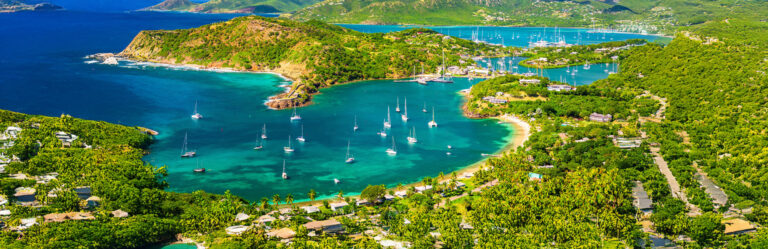
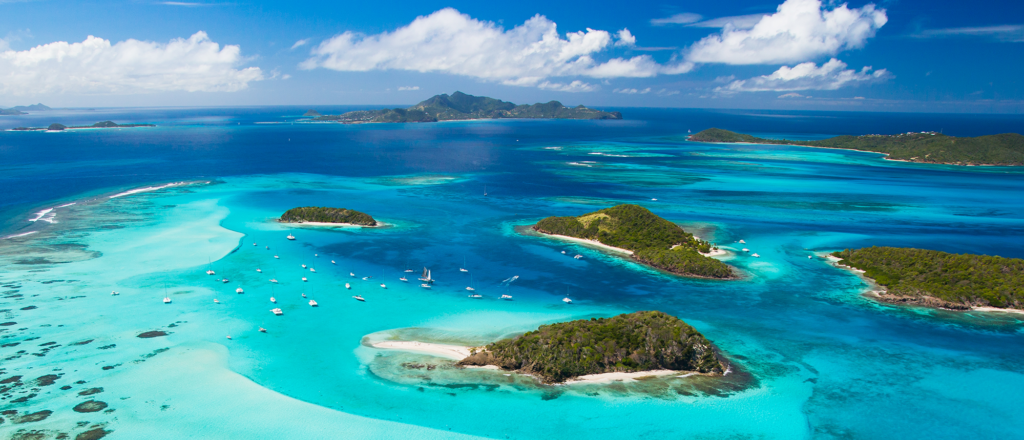
Grenada is the "Spice Isle" — nutmeg and cocoa plantations inland, waterfalls like Concord and Annandale, and St George’s a genuinely pretty working harbour town. North of Grenada, Carriacou is quieter still, with Tyrrel Bay the main anchorage and Sandy Island off Hillsborough good for a swim. Crossing into St Vincent and the Grenadines, the Tobago Cays Marine Park is the standout — uninhabited islets inside Horseshoe Reef where turtles are a near-certainty. Mayreau’s Salt Whistle Bay, Union Island’s harbour at Clifton, and Bequia’s Admiralty Bay — still tied to its whaling and model-boatbuilding history — round out a route that keeps changing character island to island.

Chartering Grenada and the Grenadines with LV
This route runs through two countries as it heads north from Grenada, so we plan the stops and the pace around that rather than just plotting a straight line — along with the longer open-water passages, so the itinerary, yacht and crew all suit a route with real sea time between stops.
Grenada and the Grenadines

Grenada and the Grenadines
One long chain of small islands running north from Grenada through Carriacou and into St Vincent's Grenadines — small populations, few big resorts, and a working economy of fishing, farming and boatbuilding that tourism sits alongside rather than replaces.

Sailing conditions
The trade winds are steady and reliable, and the islands sit far enough apart that most passages are proper stretches of open water rather than short hops — the crossing from Grenada to Carriacou is usually planned as a dedicated sail with an eye on the weather. Grenada also sits at the southern edge of the main hurricane belt, which is why so many yachts base there through the season.

On the water and on shore
Grenada is the "Spice Isle" — nutmeg and cocoa plantations inland, waterfalls like Concord and Annandale, and St George's a genuinely pretty working harbour town. North of Grenada, Carriacou is quieter still, with Tyrrel Bay the main anchorage and Sandy Island off Hillsborough good for a swim. Crossing into St Vincent and the Grenadines, the Tobago Cays Marine Park is the standout — uninhabited islets inside Horseshoe Reef where turtles are a near-certainty. Mayreau's Salt Whistle Bay, Union Island's harbour at Clifton, and Bequia's Admiralty Bay — still tied to its whaling and model-boatbuilding history — round out a route that keeps changing character island to island.

Chartering Grenada and the Grenadines with LV
This route runs through two countries as it heads north from Grenada, so we plan the stops and the pace around that rather than just plotting a straight line — along with the longer open-water passages, so the itinerary, yacht and crew all suit a route with real sea time between stops.
Enquire Now

Sample Itinerary

**Day 1 **
You arrive into Maurice Bishop International Airport and transfer by private car to Port Louis Marina, deep enough to berth a 100ft yacht stern-to and the natural embarkation point at this size. Welcome aboard, safety briefing, and a short first sail to Grand Anse Bay — an easy first evening, with the beach right there if anyone wants ashore.

Day 2
A morning ashore inland — Grenada's nutmeg and cocoa plantations, and Concord or Annandale Falls if the group wants off the water for a few hours — before rejoining the yacht for the south coast. True Blue Bay, Prickly Bay and Clarkes Court Bay are the established anchorages here, but built more around the smaller boats that base in Grenada through the season; Grand Anse or a spot off Hog Island gives the yacht more room nearby. Overnight at anchor, positioned for the crossing north.

Day 3
The passage to Carriacou is genuine open water rather than a short hop, run as a proper crossing with an early start and the weather checked the day before. Tyrrel Bay, on Carriacou's southwest coast, is the main anchorage — comfortably deep and well used to yachts this size. Sandy Island, a small cay off Hillsborough, is a short tender ride away — worth an hour for the swimming and the view back. Overnight in Tyrrel Bay.

Day 4
Another proper passage, this one crossing into St Vincent and the Grenadines. Union Island's main harbour at Clifton sits behind a fringing reef that's tight for a boat this size, so Chatham Bay, on the open west coast, is the better spot for the yacht itself — deep, uncrowded, and backed by a beach with a few low-key bars. Clifton is a short tender ride round the point for anyone who wants the town. Overnight in Chatham Bay.

Day 5
A short sail to the Tobago Cays Marine Park — uninhabited islets inside Horseshoe Reef, and the standout Grenadines stop for snorkelling with turtles. It's a protected reserve, so the yacht picks up a mooring or anchors on sand clear of the reef and seagrass rather than on top of it; a popular spot in season, so an earlier arrival helps find room. In the afternoon, a short hop or tender ride to Mayreau: Salt Whistle Bay is the most photographed beach in the Grenadines, but too shallow and tight for a well sized yacht, so it's better visited by tender while the yacht anchors round the corner in Saline Bay, deeper and more open. Overnight at Saline Bay or back at the Cays.

Day 6
A short sail north to Canouan. Glossy Bay Marina is built for maxi yachts, with the depth to take a boat this size alongside if you'd rather be at a berth than at anchor — a change of pace from five nights on the hook, with restaurants and beach clubs close by. Otherwise, anchor off one of the west coast bays for a quieter night.

Day 7
A short sail to Mustique, the private, Mustique Company-managed island roughly halfway between Canouan and Bequia — low-key day to day despite its reputation. Britannia Bay, off the main village, is the anchorage, well used by yachts of all sizes. Basil's Bar, right on the beach, is the long-standing spot for lunch or sundowners; otherwise a quiet day at anchor or a walk through the village. Overnight in Britannia Bay.

Day 8
The crossing to Bequia is straightforward and well protected once you're in the lee of the island. Admiralty Bay is deep and sheltered, with no draft concerns at this size, and Port Elizabeth ashore is worth a few hours — Bequia's whaling history and model-boatbuilding workshops are still a real, working part of the town rather than something staged for visitors. Princess Margaret Beach, a short walk or tender ride away, is the pick for an afternoon swim.

Day 9
A final morning at anchor in Admiralty Bay, with time for a last walk through Port Elizabeth or a swim before disembarkation. Bequia's own airport has limited connections, so most guests transfer to Argyle International on the St Vincent mainland — a short ferry or private boat crossing — for onward flights.

Adjusting the length
To 8 days: cut Day 7 (Mustique) and sail Canouan straight to Bequia — a genuine highlight, but the newest addition, so first to go if the trip needs to shrink.
To 7 days: also cut Day 6 (Canouan) and sail Tobago Cays/Mayreau straight to Bequia — this keeps Grenada, Carriacou, Union Island, the Cays and Bequia intact and only drops the two resort/private-island days. Alternatively, combine Day 1 and Day 2 into a single Grenada day — less time ashore for the waterfalls, with embarkation and the sail to Grand Anse or Hog Island done the same afternoon.

Available Yachts

1 result